We as an ummah have seen the rights of women steadily erode over the last 1400 years, to a point that cultural and social practices supersede the rights guaranteed to women by Allah, as seen in the Quran and Hadith. The rights that are inherent in Islam are taken for granted by societal misconceptions leading to the degradation of our women.
Allah has given us the guide by which we live our lives, and he has offered the perfect example to model ourselves after. I feel it is imperative that we look closer at the way we treat or allow others to treat women, and judge these actions according to the way of Allah. Let us begin our work in understanding a woman’s role in Islam by going to the source of Allah’s words:
“For Muslim men and women, for believing men and women, for devout men and women, for true men and women, for men and women who are patient and constant, for men and women who humble themselves, for men and women who give in charity, for men and women who fast, for men and women who guard their chastity, and for men and women who engage much in Allah's praise, for them has Allah prepared forgiveness and great reward.” Holy Quran 33:35
This is one of the most prolific versus in stating the significance of women in Islam because her role is stated unequivocally as that with a man. The term “men and women” associating their actions as the same is repeated not once or twice, but it is mentioned ten times ending in “for them has Allah prepared forgiveness and great reward.”. Men and women, for them, not him and not her, but for them is a great reward.
Is man somehow a more perfect creation then his counterpart? Again let us look to the most definitive source for the answer:
“O mankind! Reverence your Guardian-Lord, who created you from a single person, created, of like nature, his mate, and from this pair scattered (like seeds) countless men and women. Reverence Allah, through Whom you demand your mutual (rights), and reverence the wombs (that bore you); for Allah ever watches over you.” Holy Quran 4:1
“And among His signs is this that He has created for you mates from among yourselves, that you may dwell in tranquility with them; and He has put love and mercy between you. Verily in that are signs for those who reflect.” Holy Quran 30:21
In the abovementioned verses it is clear that Allah has created man and woman from a single “person” and of “like nature” and that He has created us to “dwell in tranquility” and he put “love and mercy” between us. If you look at the verses closely you notice that Allah mentions man and woman were created the same, with similar natures and are to live together in peace. It was not revealed with one in a position of superiority over the other.
Marriage gives special importance to women as well as evidenced in the Quran and the Hadith. Women have been given rights in Islam that were not seen elsewhere for hundreds of years. The nature of marriage was revealed in many ways, one of which describes the family unit that comes from wedlock:
“And Allah has made for you your mates of your own nature, and made for you, out of them, sons and daughters and grandchildren, and provided for you sustenance of the best.” Holy Quran 16:72
Describing a man and his wife Allah once again uses a most beautiful metaphor to describe them:
“They (your wives) are your garment and you are a garment for them.” Holy Quran 2:187
This simple statement means so many things if one but looks sincerely. “The garment is the grace, the beauty, the embellishment of the body, so too are wives to their husbands as their husbands are to them." – A garment helps preserve our modesty, just as a husband and wife protect each others modesty; a garment offers comfort and security to ones body just as husband and wife offer security and comfort to each other. Such a simple statement that means so much. The relationship between man and woman is described further ensuring certain protections for her; Allow me to offer a few evidences:
“Live with them in kindness; even if you dislike them, perhaps you dislike something in which Allah has placed much good” Holy Quran 4:19
“Then keep them in all decency or part from them decently. It is not lawful for you to take anything you have given them” Holy Quran 2:229
Narrated Abu Huraira:
The Prophet said, "A matron should not be given in marriage except after consulting her; and a virgin should not be given in marriage except after her permission." The people asked, "O Allah's Apostle! How can we know her permission?" He said, "Her silence (indicates her permission)." Sahih Bukhari Volume 7, Book 62, Number 67
The afore mentioned versus describe three very important aspects regarding women and marriage; First we find the Quran warns men, not women to live in kindness with his wife because Allah knows what we do not, and surely his wife can have goodness that he will not see until he opens his heart. We then move onto another verse directed to men regarding their wives, and it is a command “keep them in decency” and if that can not be done then to “leave them decently” and this too is something that seems so simplistic today, but when one sees how Allah wanted men to treat women over 1400 years ago, it becomes an amazing change of social and cultural customs that were so prevalent during this period of history. The last verse is in fact a Hadith chosen for the subject that it clarifies. Through social and cultural traditions it had become common then and even today to force ones daughter into a marriage she had no choice in. This hadith clearly demonstrates that women should not be given against their will, and even more important is that it says "Her silence (indicates her permission).” the significance of which is that if her silence is her permission, then it is not only allowing but promoting that a woman actually voice her objection and be heard. This is something not always common even by todays standards.
I will leave off with the most important role of a woman. We have seen the woman as an individual, and as a wife, now let us look at her as a mother. The most important role of a woman is as a mother, so important that the Rasool Allah said:
Narrated Abu Huraira:
A man came to Allah's Apostle and said, "O Allah's Apostle! Who is more entitled to be treated with the best companionship by me?" The Prophet said, "Your mother." The man said. "Who is next?" The Prophet said, "Your mother." The man further said, "Who is next?" The Prophet said, "Your mother." The man asked for the fourth time, "Who is next?" The Prophet said, "Your father." Sahih Bukhari Volume 8, Book 73, Number 2:
I could say so much more about the importance, and significance of women in Islam but for now I will save that for another article. I urge all Muslims to carefully look at the role of women in Islam and take a closer look at some of the most influential women in Islam – Khadija bint Khuwaylid, Aishah bint Abi Bakr, Sumayyah Bint Khabbab, Nasibah bint Ka'b al-Maziniyyah to name but a few of the many Muslimah who helped forge the path of Islam and shape our Ummah in their own ways.
Monday, May 08, 2006

Friday, May 05, 2006
The Definition of Occupation
“Nu'man b. Bashir reported Allah's Messenger (may peace be upon him) as saying: The similitude of believers in regard to mutual love, affection, fellow-feeling is that of one body; when any limb of it aches, the whole body aches, because of sleeplessness and fever.” Sahih Muslim Book 032, Number 6258:
When I read this Hadith, my heart fills with sadness because so many of us do not realy feel the importance of it. We do not see the significance of feeling the pain and sorrow of our brothers and sisters around the world. The ummah of the prophet Muhmammed (PBUH) is indeed one body, but perhaps our sickness has gotten so bad it has made us numb to the pain we should be feeling from our hurting limbs. I recently came across this poem written by an 11th grade Palestianian and perhaps the first dose of medicine to heal ourself will come from not forgetting -
The Definition of Occupation
Occupied, terrorized, genocide / while the whole world is hypnotized,
Sixty years, incessant tears / no day passes by without countless fears
For our lives, our wives, our children cry / yet the world turns away, and our spirits die.
For my land, I do stand / but I remain hopeless without a helping hand,
Oppression, suppression, depression / of every aspect of my life, you've taken possession,
Our weapons are stones, to protect our homes / but your bulldozers win and terror roams,
Yours are tanks, helicopters, and military jeeps / to kill the young man, as his mother weeps,
You control our electricity, you control our seas / you control our streets, and uproot our trees,
You close our schools, our children can't learn / you deny the refugees their right to return,
Suffering orphans, under your persecution / when they rise up, they face execution,
Families are separated, and farmers (merely) recall / the land they lost by your Apartheid Wall,
Through your diplomacy and your foreign relations /you attempt to justify and give credence to your occupation,
Palestine is my land, and I won't let you take it /and while you put the world to sleep, I try to wake it.
Abdelnasser Rashid,
April 15, 2006
11th Grade student
PALESTINE
When I read this Hadith, my heart fills with sadness because so many of us do not realy feel the importance of it. We do not see the significance of feeling the pain and sorrow of our brothers and sisters around the world. The ummah of the prophet Muhmammed (PBUH) is indeed one body, but perhaps our sickness has gotten so bad it has made us numb to the pain we should be feeling from our hurting limbs. I recently came across this poem written by an 11th grade Palestianian and perhaps the first dose of medicine to heal ourself will come from not forgetting -
The Definition of Occupation
Occupied, terrorized, genocide / while the whole world is hypnotized,
Sixty years, incessant tears / no day passes by without countless fears
For our lives, our wives, our children cry / yet the world turns away, and our spirits die.
For my land, I do stand / but I remain hopeless without a helping hand,
Oppression, suppression, depression / of every aspect of my life, you've taken possession,
Our weapons are stones, to protect our homes / but your bulldozers win and terror roams,
Yours are tanks, helicopters, and military jeeps / to kill the young man, as his mother weeps,
You control our electricity, you control our seas / you control our streets, and uproot our trees,
You close our schools, our children can't learn / you deny the refugees their right to return,
Suffering orphans, under your persecution / when they rise up, they face execution,
Families are separated, and farmers (merely) recall / the land they lost by your Apartheid Wall,
Through your diplomacy and your foreign relations /you attempt to justify and give credence to your occupation,
Palestine is my land, and I won't let you take it /and while you put the world to sleep, I try to wake it.
Abdelnasser Rashid,
April 15, 2006
11th Grade student
PALESTINE
Thursday, May 04, 2006
Charity - A Muslim's Obligation
With over 1 billion people in the world living with a consumption level below $1, and nearly 3 billion with consumption levels below $2, poverty has become a global catastrophe. Poverty wears many faces, changing from place to place, and has been described in numerous ways. Poverty is a call to action, a call to change the world so that more people may have enough to eat, have adequate shelter, or access to education and health.
Charity as defined by the Merriam-Webster dictionary: 1: benevolent goodwill toward or love of humanity. 2: generosity and helpfulness especially toward the needy or suffering; also: aid given to those in need
Charity as defined by Islam: One of the Five Pillars of Islam. An aspect of our din that is so important it is specifically mentioned in 57 different ayat in al-Quran and 284 sahih hadith from Bukhari and Muslim.
There is Zakat which is obligatory upon every Muslim; however we often forget the rewards of everyday charity. Giving above and beyond what is required of us. In Islam we understand the varying degrees of charity and whom they apply to; One should work and offer of his earnings, if one can not work, then they can volunteer their time and efforts to the poor and needy, if at last the can not do that, then they should encourage others to do good deeds.
Narrated 'Abdullah bin 'Amr:
A person asked Allah's Apostle "What (sort of) deeds in or (what qualities of) Islam are good?" He replied, "To feed (the poor) and greet those whom you know and those whom you don't know." Sahih Bukhari Volume 1, Book 2, Number 27
As you can see, the virtue of charity is looked upon with the utmost importance. The often forgotten attribute of our Islamic character, charity is so important that time and time again in the Quran Allah ties prayer and charity together in the same verses.
“And be steadfast in prayer; practice regular charity; and bow down your heads with those who bow down (in worship)” Holy Quran 2:43
“But those among them, who are well-grounded in knowledge, and the believers, believe in what hath been revealed to thee and what was revealed before thee: And (especially) those who establish regular prayer and practice regular charity and believe in Allah and in the Last Day: To them shall We soon give a great reward.” Holy Quran 4:162
In the second Surah of the Quran, Al-Baqara, the references to prayer followed by charity is mentioned no less then 5 times. Is this by accident? No, we know that Allah chose for us the most perfect message in Al-Quran and the lessons he repeats throughout are the lessons that are more important then others. Should not we take heed to these words? The command for charity, for support of your family, friends, and community is something fundamental to the Muslim Ummah.
Narrated Anas:
The Prophet said, "None of you will have faith till he wishes for his (Muslim) brother what he likes for himself." Sahih Bukhari Volume 1, Book 2, Number 12
The command for charity is something that is something that is enjoined upon every Muslim, often referring to both men and women, or to “people” in general making his commands universal:
“For those who give in Charity, men and women, and loan to Allah a Beautiful Loan, it shall be increased manifold (to their credit), and they shall have (besides) a liberal reward.” Holy Quran 57:18
Narrated Haritha bin Wahab:
I heard the Prophet saying, "O people! Give in charity as a time will come upon you when a person will wander about with his object of charity and will not find anybody to accept it, and one (who will be requested to take it) will say, "If you had brought it yesterday, would have taken it, but to-day I am not in need of it” Sahih Bukhari Volume 2, Book 24, Number 492
Charity is something best done for no other reward then the pleasure of Allah; No want of reward or expectations should be placed on charity because it is a good deed meant for the heart of the giver and the recipient. Islam asks for and rewards selflessness.
“Those who (in charity) spend of their goods by night and by day, in secret and in public, have their reward with their Lord: on them shall be no fear, nor shall they grieve.” Holy Quran 2:274
Narrated Abu Huraira:
The Prophet (p.b.u.h) said, "Seven people will be shaded by Allah under His shade on the day when there will be no shade except His. They are: …
(6) A person who practices charity so secretly that his left hand does not know what his right hand has given (i.e. nobody knows how much he has given in charity). Sahih Bukhari Volume 2, Book 24, Number 504
The act of charity is something meant for all of mankind to participate in for the benefit of all mankind. Muslims have been commanded by Allah and shown the examples of the Rasool Allah, we can not and should not want, except for wanting Allah; we should not need, except needing Allah; Our duty, our desire; For Allah, for ourselves and for all mankind let us endeavor to put and end to crisis of world poverty.
Charity as defined by the Merriam-Webster dictionary: 1: benevolent goodwill toward or love of humanity. 2: generosity and helpfulness especially toward the needy or suffering; also: aid given to those in need
Charity as defined by Islam: One of the Five Pillars of Islam. An aspect of our din that is so important it is specifically mentioned in 57 different ayat in al-Quran and 284 sahih hadith from Bukhari and Muslim.
There is Zakat which is obligatory upon every Muslim; however we often forget the rewards of everyday charity. Giving above and beyond what is required of us. In Islam we understand the varying degrees of charity and whom they apply to; One should work and offer of his earnings, if one can not work, then they can volunteer their time and efforts to the poor and needy, if at last the can not do that, then they should encourage others to do good deeds.
Narrated 'Abdullah bin 'Amr:
A person asked Allah's Apostle "What (sort of) deeds in or (what qualities of) Islam are good?" He replied, "To feed (the poor) and greet those whom you know and those whom you don't know." Sahih Bukhari Volume 1, Book 2, Number 27
As you can see, the virtue of charity is looked upon with the utmost importance. The often forgotten attribute of our Islamic character, charity is so important that time and time again in the Quran Allah ties prayer and charity together in the same verses.
“And be steadfast in prayer; practice regular charity; and bow down your heads with those who bow down (in worship)” Holy Quran 2:43
“But those among them, who are well-grounded in knowledge, and the believers, believe in what hath been revealed to thee and what was revealed before thee: And (especially) those who establish regular prayer and practice regular charity and believe in Allah and in the Last Day: To them shall We soon give a great reward.” Holy Quran 4:162
In the second Surah of the Quran, Al-Baqara, the references to prayer followed by charity is mentioned no less then 5 times. Is this by accident? No, we know that Allah chose for us the most perfect message in Al-Quran and the lessons he repeats throughout are the lessons that are more important then others. Should not we take heed to these words? The command for charity, for support of your family, friends, and community is something fundamental to the Muslim Ummah.
Narrated Anas:
The Prophet said, "None of you will have faith till he wishes for his (Muslim) brother what he likes for himself." Sahih Bukhari Volume 1, Book 2, Number 12
The command for charity is something that is something that is enjoined upon every Muslim, often referring to both men and women, or to “people” in general making his commands universal:
“For those who give in Charity, men and women, and loan to Allah a Beautiful Loan, it shall be increased manifold (to their credit), and they shall have (besides) a liberal reward.” Holy Quran 57:18
Narrated Haritha bin Wahab:
I heard the Prophet saying, "O people! Give in charity as a time will come upon you when a person will wander about with his object of charity and will not find anybody to accept it, and one (who will be requested to take it) will say, "If you had brought it yesterday, would have taken it, but to-day I am not in need of it” Sahih Bukhari Volume 2, Book 24, Number 492
Charity is something best done for no other reward then the pleasure of Allah; No want of reward or expectations should be placed on charity because it is a good deed meant for the heart of the giver and the recipient. Islam asks for and rewards selflessness.
“Those who (in charity) spend of their goods by night and by day, in secret and in public, have their reward with their Lord: on them shall be no fear, nor shall they grieve.” Holy Quran 2:274
Narrated Abu Huraira:
The Prophet (p.b.u.h) said, "Seven people will be shaded by Allah under His shade on the day when there will be no shade except His. They are: …
(6) A person who practices charity so secretly that his left hand does not know what his right hand has given (i.e. nobody knows how much he has given in charity). Sahih Bukhari Volume 2, Book 24, Number 504
The act of charity is something meant for all of mankind to participate in for the benefit of all mankind. Muslims have been commanded by Allah and shown the examples of the Rasool Allah, we can not and should not want, except for wanting Allah; we should not need, except needing Allah; Our duty, our desire; For Allah, for ourselves and for all mankind let us endeavor to put and end to crisis of world poverty.
Wednesday, February 01, 2006
Unity in Islam
What was it that made the Muslim nation so strong throughout history? What is it that has weakened the Muslim nation today so much? The answer to these questions is the same.
Unity, one word with so many implications. We have been forced apart through internal and external conflicts, and yet we still voluntarily separate ourselves by nationality, race, ethnicity, social and economic differences, even to the extent that we use Islam to separate us from one another. This is how we have fallen so far from the grace of Allah.
Islam has given us the answers we need. Islam is a unifying force throughout the universe, but it is most readily seen in the actions of Muslims. The Prophet taught to believe in Allah, and Allah taught to love one another as brothers.
“The believers are nothing else than brothers (in Islamic religion). So take reconciliation between your brothers, and fear Allah, that you may receive mercy.” Noble Quran 49:1
What is the implication of this verse? A singular, clear, and unmistakable proof of how we are to interact with each other. The Muslim, no matter who, no matter where, is a brother unto each other. Allah provides us with many examples for this ideology
“And hold fast, all of you together, to the Rope of Allah, and be not divided among yourselves, and remember Allah's Favor on you, for you were enemies one to another but He joined your hearts together, so that, by His Grace, you became brethren, and you were on the brink of a pit of Fire, and He saved you from it. Thus Allah makes His Ayat clear to you, that you may be guided.” Noble Quran 3:103
It is time that we the Muslims nation once again unite in the worship of Allah, and watch the family of Islam reclaim its pride and dignity once again. We must come together and recognize the method Allah laid before for success, including the treatment of each other. We can not afford to separate ourselves, we can no longer destroy the Muslim nation with the trivialities. Let us treat each other as Allah planned, look once again to the Quran for this guidance in the first sentence of Surah 48: Al Fath (The Victory), ayat 29
"strong against unbelievers but compassionate amongst each other" Noble Quran 48:29
We should also look into the best example of all mankind, the Prophet Muhammad to see what he said and how he acted, to perpetuate this feeling of brotherhood.
“Abu Huraira reported Allah's Messenger (may peace be upon him) as saying: Verily. Allah would say on the Day of Resurrection: Where are those who have mutual love for My Glory's sake? Today I shall shelter them in My shadow when there is no other shadow but the shadow of Mine.” Sahih Muslim Book 032, Number 6225:
Seek refuge in the shelter of Allah’s shadow simply by loving for the sake of Allah, caring for your fellow Muslims for no other reason then the pleasure of Allah. Let us look further into the Hadith for further examples
“Abu Musa reported Allah's Messenger (may peace be upon him) as saying: A believer is like a brick for another believer, the one supporting the other.” Sahih Muslim Book 032, Number 6257:
“Nu'man b. Bashir reported Allah's Messenger (may peace be upon him) as saying: The similitude of believers in regard to mutual love, affection, fellow-feeling is that of one body; when any limb of it aches, the whole body aches, because of sleeplessness and fever.” Sahih Muslim Book 032, Number 6258:
When giving commands regarding the Islamic brotherhood, the Qur’an uses a beautiful style with a profound message. Using a singularity of expression when referring to different words, the Quran imparts a sense of oneness with exceptional fluency. Instead of saying, "greet each other" it says, "greet yourself." Noble Quran 24:61. Instead of saying, "do not defame each other," it says, "do not defame yourself." Noble Quran 49:11. Instead of saying, "The message is clear: Whatever is happening to others in the brotherhood, is actually happening to yourself. It is this sense of self, this inclusive sense of family that will allow us to restore the honor and pride to our nation.
Unity, one word with so many implications. We have been forced apart through internal and external conflicts, and yet we still voluntarily separate ourselves by nationality, race, ethnicity, social and economic differences, even to the extent that we use Islam to separate us from one another. This is how we have fallen so far from the grace of Allah.
Islam has given us the answers we need. Islam is a unifying force throughout the universe, but it is most readily seen in the actions of Muslims. The Prophet taught to believe in Allah, and Allah taught to love one another as brothers.
“The believers are nothing else than brothers (in Islamic religion). So take reconciliation between your brothers, and fear Allah, that you may receive mercy.” Noble Quran 49:1
What is the implication of this verse? A singular, clear, and unmistakable proof of how we are to interact with each other. The Muslim, no matter who, no matter where, is a brother unto each other. Allah provides us with many examples for this ideology
“And hold fast, all of you together, to the Rope of Allah, and be not divided among yourselves, and remember Allah's Favor on you, for you were enemies one to another but He joined your hearts together, so that, by His Grace, you became brethren, and you were on the brink of a pit of Fire, and He saved you from it. Thus Allah makes His Ayat clear to you, that you may be guided.” Noble Quran 3:103
It is time that we the Muslims nation once again unite in the worship of Allah, and watch the family of Islam reclaim its pride and dignity once again. We must come together and recognize the method Allah laid before for success, including the treatment of each other. We can not afford to separate ourselves, we can no longer destroy the Muslim nation with the trivialities. Let us treat each other as Allah planned, look once again to the Quran for this guidance in the first sentence of Surah 48: Al Fath (The Victory), ayat 29
"strong against unbelievers but compassionate amongst each other" Noble Quran 48:29
We should also look into the best example of all mankind, the Prophet Muhammad to see what he said and how he acted, to perpetuate this feeling of brotherhood.
“Abu Huraira reported Allah's Messenger (may peace be upon him) as saying: Verily. Allah would say on the Day of Resurrection: Where are those who have mutual love for My Glory's sake? Today I shall shelter them in My shadow when there is no other shadow but the shadow of Mine.” Sahih Muslim Book 032, Number 6225:
Seek refuge in the shelter of Allah’s shadow simply by loving for the sake of Allah, caring for your fellow Muslims for no other reason then the pleasure of Allah. Let us look further into the Hadith for further examples
“Abu Musa reported Allah's Messenger (may peace be upon him) as saying: A believer is like a brick for another believer, the one supporting the other.” Sahih Muslim Book 032, Number 6257:
“Nu'man b. Bashir reported Allah's Messenger (may peace be upon him) as saying: The similitude of believers in regard to mutual love, affection, fellow-feeling is that of one body; when any limb of it aches, the whole body aches, because of sleeplessness and fever.” Sahih Muslim Book 032, Number 6258:
When giving commands regarding the Islamic brotherhood, the Qur’an uses a beautiful style with a profound message. Using a singularity of expression when referring to different words, the Quran imparts a sense of oneness with exceptional fluency. Instead of saying, "greet each other" it says, "greet yourself." Noble Quran 24:61. Instead of saying, "do not defame each other," it says, "do not defame yourself." Noble Quran 49:11. Instead of saying, "The message is clear: Whatever is happening to others in the brotherhood, is actually happening to yourself. It is this sense of self, this inclusive sense of family that will allow us to restore the honor and pride to our nation.
The Living Miracle
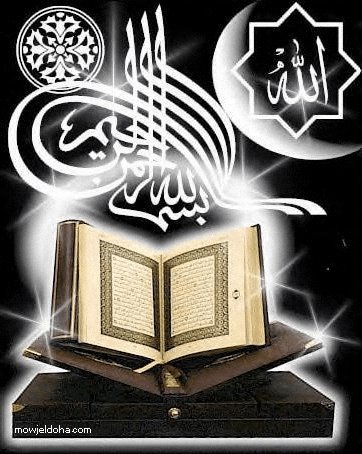
From the beginning of time Allah has sent his prophets and messengers, from Adam to Muhammad. Each prophet brought with him the laws of Allah and the highest standard of moral excellence, with their legacies preserved by each following prophet who reinforced the commandments of Allah. This chain eventually ended with the coming of Muhammad, the last and seal of all prophets. Sent as a Messenger for all of mankind, he was sent with a universal message which would be preserved for all times within the Holy Quran.
While the word of God is said to be preserved in the pages of the Tanakh (the Jewish Scriptures) or within the Bible (Christian scriptures), history has shown these efforts have been forced to travel a long and winding road. Without further discourse into why we do not follow these books, I would like to take the time to make mention of the number of books within them. The Tanakh contains 39 books, The Old Testament in Protestant Bibles contains 39 books as well, however Catholic Bibles contains seven more books than are found in the Protestant Bible or the Tanakh (46 compared to 39, respectively). These seven books are called Apocrypha and Catholics know them as the Deuterocanonical books. These seven books are: Tobit, Judith, 1 and 2 Maccabees, Wisdom of Solomon, Ecclesiasticus (or, Sirach), and Baruch. Also, Catholic Bibles contain an additional six chapters (107 verses) in the book of Esther and another three in the book of Daniel (174 verses). These books and chapters were found in Bible manuscripts in Greek only, and were not part of the Hebrew Canon of the Old Testament.
It is now time not to delve further into why we do not follow the Tanakh or Bible, but instead, why we do follow the Holy Quran. It has been said that the whole of the Quran has a perfect fluency, a superb clarity and soundness, a firm coherence, and a well-established harmony and proportion, and a strong mutual support and interrelation amongst its sentences and their parts, and an elevated correspondence amongst its verses and their purposes. The text of the Holy Quran has remained unchanged over the past 1400 years. The millions of copies of the Quran circulating in the world today are all identical down to a single letter. And this is not strange since God says in the Holy Quran that He Himself will guard this book:
“Verily: It is We Who have sent down the Dhikr (i.e. the Qur'ân) and surely, We will guard it (from corruption).” Noble Quran 15:9
This is the honor bestowed upon mankind, a perfect revelation, preserved for all times. The Quran is divided into 114 Surahs or Chapters and each Chapter consists of individual Ayaat or verses. There are in total 6,348 verses in the Holy Quran. These numbers remain unchanged regardless of time or place. Allah even challenges those who disbelieve to disprove the Quran, while assuring them they will never be able to.
“And if you are in doubt concerning that which We have sent down to Our slave (Muhammad Peace be upon him), then produce a Sûrah of the like thereof and call your witnesses besides Allâh, if you are truthful. But if you do it not, and you can never do it, then fear the Fire whose fuel is men and stones, prepared for the disbelievers.” Noble Quran 2:23-24
"If the mankind and the jinns were together to produce the like of this Qur'ân, they could not produce the like thereof, even if they helped one another." Noble Quran 17:88
The glory of the Quran could fill an infinite number of pages, so I will conclude with this reminder, the reason behind this article. All of mankind should appreciate the beauty of it, but it is we the Muslim Ummah that should be grateful to Allah, for all of his mercy, his greatest mercy was the Holy Quran, miracle of miracles, the living miracle, a mercy that lives through time, and offers hope, inspiration and the path to eternal salvation to all. Embrace it, make it part of us, for we can not have a better part of us, then that which worships, and obeys Allah.
Let him lead our way
What made the Islamic Ummah so great throughout history was the example set by its leaders. We can look at the beautiful simplistic structure that Allah laid down for us, complete in form and flow, and see how he who exhibited the best qualities of mankind became the example and measure of what the Muslim leaders should aspire to be.
Knowing what the Muslims believe of Muhammad I think it is important for the Muslim Ummah to recognize that his character was flawless, and his greatness universal. He is not only an example for us but an example for all mankind. I have selected several examples of what non- Muslims have said of the Prophet Muhammad to help us understand his true greatness of person and example.
"...a mass of detail in the early sources shows that he was an honest and upright man who had gained the respect and loyalty of others who were likewise honest and upright men." Encyclopedia Britannica Vol. 12
"He must be called the Savior of Humanity. I believe that if a man like him were to assume the dictatorship of the modern world, he would succeed in solving its problems in a way that would bring it much needed peace and happiness." The Genuine Islam, George Bernard Shaw Singapore, Vol. 1, No. 8, 1936
"If greatness of purpose, smallness of means and astounding results are the three criteria of human genius, who could dare to compare any great man in modern history with Muhammad? The most famous men created arms, laws and empires only. They founded, if anything at all, no more than material powers which often crumbled away before their eyes. This man moved not only armies, legislation, empires, peoples and dynasties, but millions of men in one-third of the then inhabited world; and more than that, he moved the altars, the gods, the religions, the ideas, the beliefs and souls... his forbearance in victory, his ambition, which was entirely devoted to one idea and in no manner striving for an empire; his endless prayers, his mystic conversations with God, his death and his triumph after death; all these attest not to an imposture but to a firm conviction which gave him the power to restore a dogma. This dogma was two-fold, the unity of God and the immateriality of God; the former telling what God is, the latter telling what God is not; the one overthrowing false gods with the sword, the other starting an idea with the words. Philosopher, orator, apostle, legislator, warrior, conqueror of ideas, restorer of rational dogmas, of a cult without images, the founder of twenty terrestrial empires and of one spiritual empire, that is Muhammad. As regards all the standards by which Human Greatness may be measured, we may well ask, is there any man greater then he?” Alphonse de Lamartine, Historire de la Turquie, Paris, 1854, Vol. II pp. 276-277
“I wanted to know the best of the life of one who holds today an undisputed sway over the hearts of millions of mankind.... I became more than ever convinced that it was not the sword that won a place for Islam in those days in the scheme of life. It was the rigid simplicity, the utter self-effacement of the Prophet the scrupulous regard for pledges, his intense devotion to his friends and followers, his intrepidity, his fearlessness, his absolute trust in God and in his own mission. These and not the sword carried everything before them and surmounted every obstacle. When I closed the second volume (of the Prophet's biography), I was sorry there was not more for me to read of that great life.” Mahatma Gandhi, 'Young India,' 1924
"one man single handedly, could weld warring tribes and wandering Bedouins into a most powerful and civilized nation in less than two decades." Thomas Calyle, 'Heroes and Heroworship'
"Muhammad was the soul of kindness, and his influence was felt and never forgotten by those around him" Diwan Chand Sharma, The Prophets of the East, Calcutta, 1935, pp. 12
"The intellectual image of the Deity has never been degraded by any visible idol; the honor of the Prophet has never transgressed the measure of human virtues; and his living precepts have restrained the gratitude of his disciples within the bounds of reason and religion." Edward Gibbon and Simon Ockley, History of the Saracen Empires, London, 1870, p. 54
"It was the first religion that preached and practiced democracy; for, in the mosque, when the call for prayer is sounded and worshippers are gathered together, the democracy of Islam is embodied five times a day when the peasant and king kneel side by side and proclaim: 'God Alone is Great'... I have been struck over and over again by this indivisible unity of Islam that makes man instinctively a brother." Sarojini Naidu, Ideals of Islam, vide Speeches & Writings, Madras, 1918, p. 169
"My choice of Muhammad to lead the list of the world's most influential persons may surprise some readers and may be questioned by others, but he was the only man in history who was supremely successful on both the religious and secular levels." Michael H. Hart, "The 100: A Ranking of the Most Influential Persons in History", New York, 1978, p. 33
"The personality of Muhammad, it is most difficult to get into the whole truth of it. Only a glimpse of it I can catch. What a dramatic succession of picturesque scenes. There is Muhammad the Prophet. There is Muhammad the Warrior; Muhammad the Businessman; Muhammad the Statesman; Muhammad the Orator; Muhammad the Reformer; Muhammad the Refuge of Orphans; Muhammad the Protector of Slaves; Muhammad the Emancipator of Women; Muhammad the Judge; Muhammad the Saint. All in all these magnificent roles, in all these departments of human activities, he is alike a hero." K.S. Ramakrishna Rao, "Muhammad the Prophet of Islam"
If the rest of the world can see what a perfect example our beloved Prophet was is it not time for us, his Ummah to recognize and follow his example?
Muhammad was the best of all men, the most complete example of what mankind could be, spiritual and moral guide, social and political reformer, faithful friend and companion, devoted husband and loving father. All of his striving was for the sole purpose of uniting mankind for the worship of one God on the basis of moral excellence. Muhammad or his followers never at any time claimed that he was a son of God or the God-incarnate instead maintaining that he always was and is a Messenger chosen by God.
Fourteen centuries have past and his standards of excellence still stand as an example to all mankind. A guiding light, his message from Allah is preserved in Al-Quran, his traditions and saying preserved in his sunnah. Let us unite together, putting aside as he did, race and nationality, social or economic status, and become once again the Ummah of the Prophet Muhammad following the way Allah has set before us.
Knowing what the Muslims believe of Muhammad I think it is important for the Muslim Ummah to recognize that his character was flawless, and his greatness universal. He is not only an example for us but an example for all mankind. I have selected several examples of what non- Muslims have said of the Prophet Muhammad to help us understand his true greatness of person and example.
"...a mass of detail in the early sources shows that he was an honest and upright man who had gained the respect and loyalty of others who were likewise honest and upright men." Encyclopedia Britannica Vol. 12
"He must be called the Savior of Humanity. I believe that if a man like him were to assume the dictatorship of the modern world, he would succeed in solving its problems in a way that would bring it much needed peace and happiness." The Genuine Islam, George Bernard Shaw Singapore, Vol. 1, No. 8, 1936
"If greatness of purpose, smallness of means and astounding results are the three criteria of human genius, who could dare to compare any great man in modern history with Muhammad? The most famous men created arms, laws and empires only. They founded, if anything at all, no more than material powers which often crumbled away before their eyes. This man moved not only armies, legislation, empires, peoples and dynasties, but millions of men in one-third of the then inhabited world; and more than that, he moved the altars, the gods, the religions, the ideas, the beliefs and souls... his forbearance in victory, his ambition, which was entirely devoted to one idea and in no manner striving for an empire; his endless prayers, his mystic conversations with God, his death and his triumph after death; all these attest not to an imposture but to a firm conviction which gave him the power to restore a dogma. This dogma was two-fold, the unity of God and the immateriality of God; the former telling what God is, the latter telling what God is not; the one overthrowing false gods with the sword, the other starting an idea with the words. Philosopher, orator, apostle, legislator, warrior, conqueror of ideas, restorer of rational dogmas, of a cult without images, the founder of twenty terrestrial empires and of one spiritual empire, that is Muhammad. As regards all the standards by which Human Greatness may be measured, we may well ask, is there any man greater then he?” Alphonse de Lamartine, Historire de la Turquie, Paris, 1854, Vol. II pp. 276-277
“I wanted to know the best of the life of one who holds today an undisputed sway over the hearts of millions of mankind.... I became more than ever convinced that it was not the sword that won a place for Islam in those days in the scheme of life. It was the rigid simplicity, the utter self-effacement of the Prophet the scrupulous regard for pledges, his intense devotion to his friends and followers, his intrepidity, his fearlessness, his absolute trust in God and in his own mission. These and not the sword carried everything before them and surmounted every obstacle. When I closed the second volume (of the Prophet's biography), I was sorry there was not more for me to read of that great life.” Mahatma Gandhi, 'Young India,' 1924
"one man single handedly, could weld warring tribes and wandering Bedouins into a most powerful and civilized nation in less than two decades." Thomas Calyle, 'Heroes and Heroworship'
"Muhammad was the soul of kindness, and his influence was felt and never forgotten by those around him" Diwan Chand Sharma, The Prophets of the East, Calcutta, 1935, pp. 12
"The intellectual image of the Deity has never been degraded by any visible idol; the honor of the Prophet has never transgressed the measure of human virtues; and his living precepts have restrained the gratitude of his disciples within the bounds of reason and religion." Edward Gibbon and Simon Ockley, History of the Saracen Empires, London, 1870, p. 54
"It was the first religion that preached and practiced democracy; for, in the mosque, when the call for prayer is sounded and worshippers are gathered together, the democracy of Islam is embodied five times a day when the peasant and king kneel side by side and proclaim: 'God Alone is Great'... I have been struck over and over again by this indivisible unity of Islam that makes man instinctively a brother." Sarojini Naidu, Ideals of Islam, vide Speeches & Writings, Madras, 1918, p. 169
"My choice of Muhammad to lead the list of the world's most influential persons may surprise some readers and may be questioned by others, but he was the only man in history who was supremely successful on both the religious and secular levels." Michael H. Hart, "The 100: A Ranking of the Most Influential Persons in History", New York, 1978, p. 33
"The personality of Muhammad, it is most difficult to get into the whole truth of it. Only a glimpse of it I can catch. What a dramatic succession of picturesque scenes. There is Muhammad the Prophet. There is Muhammad the Warrior; Muhammad the Businessman; Muhammad the Statesman; Muhammad the Orator; Muhammad the Reformer; Muhammad the Refuge of Orphans; Muhammad the Protector of Slaves; Muhammad the Emancipator of Women; Muhammad the Judge; Muhammad the Saint. All in all these magnificent roles, in all these departments of human activities, he is alike a hero." K.S. Ramakrishna Rao, "Muhammad the Prophet of Islam"
If the rest of the world can see what a perfect example our beloved Prophet was is it not time for us, his Ummah to recognize and follow his example?
Muhammad was the best of all men, the most complete example of what mankind could be, spiritual and moral guide, social and political reformer, faithful friend and companion, devoted husband and loving father. All of his striving was for the sole purpose of uniting mankind for the worship of one God on the basis of moral excellence. Muhammad or his followers never at any time claimed that he was a son of God or the God-incarnate instead maintaining that he always was and is a Messenger chosen by God.
Fourteen centuries have past and his standards of excellence still stand as an example to all mankind. A guiding light, his message from Allah is preserved in Al-Quran, his traditions and saying preserved in his sunnah. Let us unite together, putting aside as he did, race and nationality, social or economic status, and become once again the Ummah of the Prophet Muhammad following the way Allah has set before us.
Subscribe to:
Posts (Atom)